


The Quilombo Experience: dance as refuge, memory and cultural bridge
The story of Luana Dias and the community project that seeks to bring Brazilian culture to the heart of the Berkshires
In the Berkshires, where festivals and cultural life are constantly evolving, one project seeks to make its mark through a relatively unexplored avenue in the region: The Quilombo Experience — Brazilian culture told from within, through movement, music, rhythm, and history.
This project is part of the Berkshire Brazil initiative, and in its second year, it aims to leave a lasting imprint on a county where cultural diversity continues to grow, and where many identities still remain largely invisible in formal spaces.
Behind this titanic mission is a face already familiar in Berkshire County: Luana Dias .

If you've attended the Fourth of July parades , you've surely seen her smiling, dressed in a vibrant Brazilian carnival outfit, striding confidently down North Street . Or perhaps you remember her at venues like the Wandering Dance Festival or Jacob's Pillow , or hosting social events at Dotty's Café ; because if anything defines Luana, it's her constant search for the next stage, the next project, the next cultural encounter.
She herself defines The Quilombo Experience as "the most important of my career" as it seeks to close that gap that exists in our community through art and community education to the rhythm of samba, capoeira, poetry and other rhythms and artistic expressions that only the richness of Brazil can offer us.
But to understand the scope of this initiative, it's necessary to first tell Luana's story . Because her journey doesn't begin with grand stages, lights, spotlights, or that typical smile she's known for in the Berkshires, but with a childhood marked by shyness and a destiny in dance that, according to her, was never a conscious choice.
Luana grew up in São Paulo, Brazil , a metropolis that, like the rest of the country, was trying to rebuild itself in the 1990s after the years of military dictatorship. In that context, Brazil has historically found in dance and soccer forms of collective escape from economic crises, social tensions, and structural challenges.
In her personal life, that “escape” also became a tool for emotional survival. “Dance is therapy; dance, because dancing makes your sorrows disappear,” Luana repeats like a mantra. It’s not a motivational phrase, but a truth forged over the years.

Although today she appears confident and smiling as she moves across the stage, it wasn't always like that. Before, that body was inhabited by a shy, fearful girl who spoke little, even within her own family. Even so, her mother took her to samba rehearsals in the village of São José do Rio Petro, where her mother had opened her own samba school. There, with some initial resistance, she found her calling, or rather, her calling found her, because her relationship with dance wasn't always easy.
“When I was six years old, my mother also took me to classical ballet practice and I remember that they sat us in a circle and never made us dance, it was boring, not fun at all and I remember telling my mother that I would never dance again.”
But it was there, in that communal space, that at age 14 Luana met a key figure in her life: Celso Caran , artistic director of a major dance company in Italy and Brazil. Seeing her at the rehearsals she attended with her mother, he told her she had exactly the profile he was looking for. Unbeknownst to her, that moment would change her life forever. It was her formal entry into professional training, onto the stage, and a personal transformation that she sums up with a powerful phrase:
“I didn’t choose the dance; the dance chose me.”
After leaving Brazil, professional contracts came at a very young age, and with them, the typical family conflict that many artistic careers face. At 17 , Luana received her first contract, paid in euros, to travel to Italy . Her mother defended the decision as if it were her own. It was she who insisted that this opportunity could define everything. Luana remembers that support with a vivid image: " the sparkle in my mother's eyes as she watched me fulfill a dream that was also hers . "
“I remember the first time they asked me to wear a bikini to dance; I felt very embarrassed and was afraid to go on stage dressed like that. Celso took me to a corner because he noticed I was very nervous and said to me: 'Why are you nervous? Luana, when you're on stage, that's not you; it's a character.'”
Those words not only helped her overcome the nervousness and shyness of that moment, but they also planted the seeds of a profound and lasting transformation within her. Through dance, Luana discovered a renewed version of herself: more confident, stronger, and in control of her own voice; she was empowered.

After her three-month contract, her body returned to university, but her mind was dancing on the stages of Brazil. Luana was a different person; she had found her passion. She left her studies and in São Paulo learned what it means to live from art: passion, yes, but also uncertainty, sacrifices, and constant ups and downs. She traveled to Korea, where competition and friction with other Afro-Brazilian dancers were commonplace, as she was the only Black woman performing alongside white women in classical ballet: "Do you think you're so great for dancing with them?" they would ask her. In Russia, she reached for the stars: she appeared on national television, in films, even at presidential performances, and of course, performed in packed theaters with her dance company.
That tension between creativity and realism opened a new chapter in her life: teaching. In 2012, she began teaching Zumba in Italy, which would become her home for several years. Over time, she became a Zumba Jammer , a leadership and training role within that international community, to the point of leaving dance performances for several years. For Luana, it wasn't a detour, but a continuation: the connection between art, body, health, and well-being has always been central to her perspective.
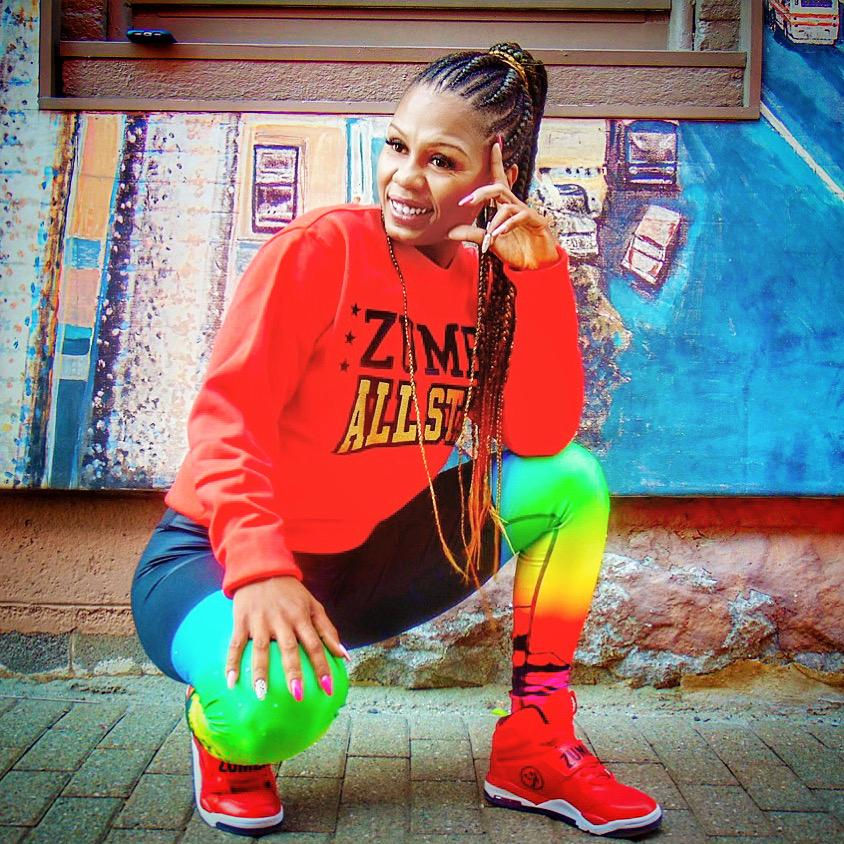
With the pandemic, however, that cycle came to an end. In 2020 , she left her formal role with Zumba Jammer in Europe and arrived in the Berkshires with all her passion for dance packed in a suitcase, waiting for the right moment to open it. Upon arriving in the Berkshires, she faced a question that would shape the course of the following years: was there really a place for Brazilian culture in the region, or was her project destined to remain on hold?

For the first time in her life, Luana began working in non-artistic jobs. Her first job was at Guido's , at the door, checking that people were wearing their masks and controlling customer access, while she looked for ways to revive her vocation after a successful career in Europe.
That opportunity came from an unexpected but somewhat familiar place: Trattoria Rustica , the Italian restaurant where her mother worked and which used to be located on McKay St in Pittsfield. There, Italian culture once again opened its doors for her to perform live for the first time in the Berkshires.

Luana remembers that first samba as a total shock: her dazzling costume, adorned with colorful feathers, the spirit of Brazilian carnival took the audience by surprise. Jaws dropped, forks full of pasta, they tried to process the wonder they had just witnessed. Finally, everyone stood and applauded. For her, that moment was confirmation: there was an audience; what was lacking was the space for connection . She sums it up best: “ They didn’t know they liked it because they weren’t familiar with it.”
Similarly, The Quilombo Experience is an invitation to discovery: it will feature live music, workshops, cultural experiences, talks, and artistic training for ten select artists who will receive a stipend of $600.00 USD. The call for applications is open until March; you can apply here.
This project, which will have a public presentation to close the residency program, is born from the collective support of Blackshires , Berkshire Taconic Foundation and Jacob's Pillow , as well as key creative alliances, including their collaboration with Brazilian musician Taz Ramos and his Samba Quartet , which bring an authentic and vibrant sonic dimension to the artistic proposal.

The Quilombo Experience is proof that their mission goes beyond mere entertainment. It's not just about performing and moving on, but about creating learning, training, and community processes that endure and strengthen the local cultural scene. “Quilombo” isn't just decoration: it's history. In Brazil, quilombos were communities founded by enslaved Africans who escaped the colonial system in search of refuge that allowed them to be themselves, often living and interacting with Indigenous peoples.
In Brazil, Luana explains, " samba schools are not just about carnival: they are community spaces that educate, create jobs, sustain culture, and prepare the community for a grand collective performance." It is this spirit that she seeks to translate to the Berkshires context with this experience.
Ultimately, Luana Dias seeks to create a safe and sacred space , a symbol of resistance, roots, and cultural survival that helps us understand our past in order to intervene in the present and forge our future : who we are when we migrate, what traditions we carry, and how collective refuges are created when the world becomes hostile.

Ultimately, Luana's journey is a single continuous line: a shy girl who found a "character" on stage to speak to the world; a young woman who traveled far with her mother's dream shining in her eyes; an artist who understood that art does not always guarantee stability, but it does guarantee meaning; and a cultural educator who today tries to build what she once lacked upon arriving.
With The Quilombo Experience , the invitation is not just to watch, but to participate, learn and be part of a story that is being built collectively in the Berkshires.


