


Inside ICE: From the Icebox to Deportation. Part 2
If you missed part one, you can read it here: Part 1
I soon found out.
"How did you enter the United States?" the ICE agent asked me through an interpreter.
—You have my information, if you arrested me it's because you have my information.
"How did you get in? Which way?" The question returned like a battering ram, giving me no respite, but I also realized that ICE didn't know who I was.
"I didn't arrest you. They call us and hand them over to us; they tell us where they are." The interpreter continued, trying to mimic the officer's annoyed tone, "I didn't go to arrest you. We didn't go there to get you. They handed you over to us. Tell us your name."
I realized the Hispanic policeman had turned me in; there was no other explanation . After giving my name, they put me in a tiny room no bigger than a bathroom. If it had been the size of the bathrooms in the houses I cleaned in Great Barrington, it would have been paradise; but no, there were five of us women at first. Then there were more of us; we couldn't even lie down anymore. We had to sit up to sleep on our knees, trying to escape the light that never turned off. There was a door with a small window, a sink, and a toilet where we all relieved ourselves. They gave us two biscuits, one in the morning and one at night. That's how we measured time, in biscuits, because there was no night or day, only the light always on, as if the system wanted to erase our will with so much light.

Between the smell of the bathroom, the fear, and the desperation, we drank water from a tap. I spent four days like that, unable to sleep because the cold in that place kept your bones awake. You go crazy there. Hunger becomes a constant noise, and amidst those sounds, you begin to doubt your own thoughts.
There was a pregnant woman, and the ICE agents hadn't noticed. They're in such a hurry to lock us up that they don't properly check our health. I remember it started with a terrible headache. We asked for help. They took her away after seeing us banging desperately on the window. She came back, said they'd given her a pill and a sandwich. Angrily, they asked if anyone else was pregnant; we all shook our heads no. And then… then she got worse. Her belly was aching, three months along. She left, and I didn't hear from her again until I asked the doctor about the pregnant woman (that doctor had seen us before sending us to Texas). In her broken Spanish, she answered my question, "She was pregnant."
Then came Texas: they changed me to a brown uniform, and moved us to a warehouse with three bathrooms that sometimes didn't work. There were some kids playing tag as if they were in the street. Two showers. Everything open. Privacy: none. The showers didn't work either. There were days when no water came out at all. And when it did, sometimes it overflowed dirty, smelly, as if the place itself were rotten.
Texas was another facet of the same monster. A place where they tell you as soon as you arrive that you need money to eat, to have toilet paper, soap, shampoo, to bathe. They give you five minutes to call, to ask them to put credit on a card, to beg without crying too much because you're out of energy . I called. I had to. My children were there. I had to make sure someone went for them, even though the other women were telling me, "Don't talk, they're monitoring, they want information, they want to come for your family."
That's the kind of dilemma that tears a mother apart: if you stay silent, you abandon your child; if you speak out, you expose them. A friend sent me $100 every week so I could eat and clean. That's the mechanism ICE uses; every day you become a burden to your friends and family. It's a double pressure that tries to destroy you; the agents were rude. They spoke to you as if your suffering were just a whim. If someone got sick, they were told they weren't home to ask for medicine. Just sign their deportation papers and that's it. That doctors, dignity, and rest were "prizes" you'd get back in your country.
And if that didn't work, every so often, the same pressure:
—Sign your deportation order. If you don't sign, you'll stay. The judge isn't scheduling appointments for several months. You'd better sign it now... they're going to deport you anyway.
In the four months I spent in that limbo, I saw something that changed me forever: I saw 35-year-old women in the United States, with houses, taxes paid, and children who were citizens. I saw a 65-year-old woman, asthmatic, inhaler in hand, with papers proving she wasn't "bad," that she hadn't committed any crimes. And yet, they deported her to her country of origin; I understood that the "process" isn't a path: it's a corridor with the exit already marked.

I endured it from May to October because I didn't want to sign. Because I didn't want to return to my country. Because no one wants to go back to a place where poverty gnaws at your future. I sold boiled corn, picked coffee, spread fertilizer in the fields, sold tamales, and even then it wasn't enough. It was misery. I couldn't afford rent, food, or school. I didn't own a home. I was a single mother. That's why I made the decision so many women make: to try for a better life so my children could have a better education, a less burdened existence.
In October, after four months of being detained, I couldn't take it anymore. A friend who knew how to write in English helped me. She had envelopes and stamps. I dictated a letter to her for the judge. I asked for voluntary release. Not because I wanted to give up… but because I wanted to stop being a shadow in a warehouse , I wanted to stop being an expense and a burden to my friends who sent me $100 a week, I wanted to stop growing old locked up.
A few days later they called me. They took me before the judge along with other people who had also agreed to leave voluntarily.
—Does he want you deported?
—Yes, how do I do it?
—Yes, you're deported.
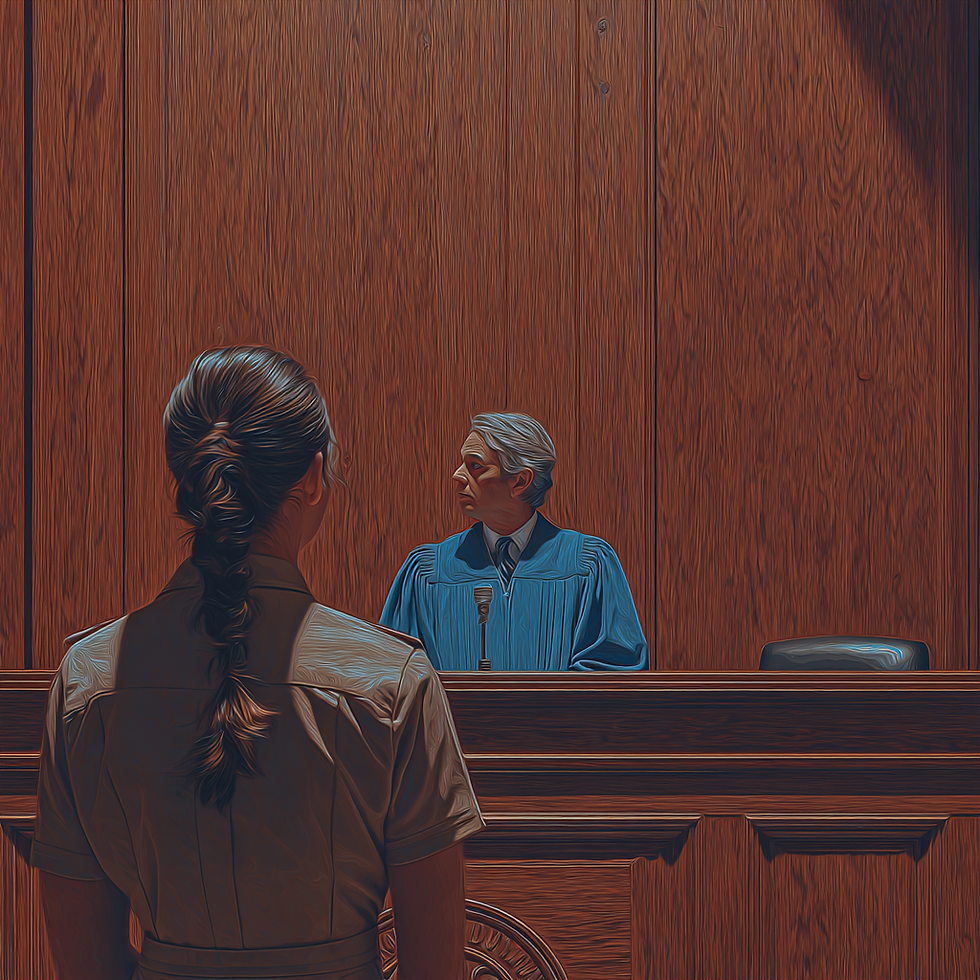
That's how it works. ICE told us to just answer yes. Every day they ask us, "Who wants deportation? Who wants deportation?" At each court we go to, there are more than 30 people in a single shift. There are several shifts a day. Who can stand it? In the four months I was in that warehouse, I saw many people who came and went. With or without crimes, they were deported. It was a waste of time. They just made us see the judge as a smokescreen; the game was already rigged.
And that was it. A hammer blow and that was it. A formality. A quick act that seemed to say: next, your story doesn't matter.
Then I waited another four days. “We have to fill the plane,” they told me. As if we were boxes being arranged in a courier service.
On the day of the flight, they took me out again at eleven o'clock at night. Chains again. Vans, buses, more people. Fifty people per bus. Men, women, families with children, small children. Nobody gives you water. Nobody gives you food. They promise you things as if they were true, but during the trip they don't give you anything. I had water when I got off… because my country gave me a small bottle. Not them.
The plane was packed. Not a single empty seat. Just deportees, all crying like me. I was crying for my children—a teenager, a little boy. I was crying because I felt my dream had ended like a candle: suddenly, without warning, leaving only smoke.
I kept thinking about them while thinking, “I didn’t do anything. I didn’t kill. I didn’t steal. I didn’t hurt anyone. Why this?” When I landed, the first thing that crossed my mind was to go after them. To go back. To cross over. To reunite. But then I felt the true weight of what had happened to me: hunger, cold, endless daylight, open toilets, humiliation, threats, pressure, chains. And I told myself something I still tell myself: “I’m not going back to those places.”
It hurt to accept it, like one hurts and accepts an amputation. But I accepted it.
I returned to my country where I was unemployed for two months. I survived however I could, asking God for something money can't buy: strength. Eventually, I met a family who gave me a job. And here I am. Without my children by my side. With their future in the United States and my heart beating for them from here. And with every heartbeat, I try not to blame myself for their future. I try to tell myself that fear didn't take away my love, that deportation didn't take away my right to dream of hugging them again, and that my story—told like this, with the chill of the icebox still fresh in my mind—isn't meant to elicit pity, it's so that no one dares to call us criminals, because we aren't, we never were, and we never will be.


